Home Lines - SS ‘Oceanic’ (1965) to Peace Boat’s - SS ‘The Oceanic’ (2009 to 2012)

With
Please Note: All ssmaritime as well
as my other related maritime & cruise sites are 100% non-commercial and
privately owned sites. Be assured that I am NOT associated with any shipping or
cruise companies or agencies or any other organisations! The author has been in
the passenger shipping industry since May 1960, but although retired and unwell,
I occasionally attempt to write an article now and then, in order to bring
enjoyment and pleasure to ship enthusiasts past passengers and crew.
‘Oceanic’ - Pullmantur Cruises
(2001-2012) / ‘The Oceanic’ – Peace Boat (2009 - 2012)
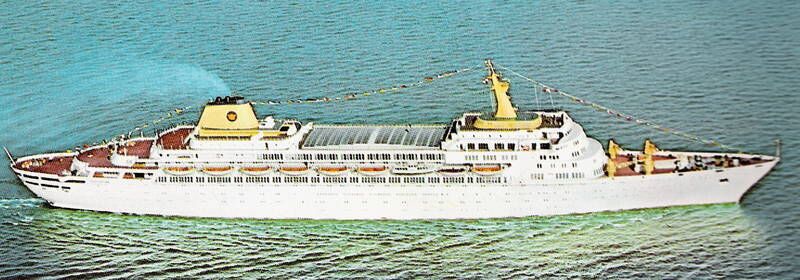
A Link to our Oceanic Photo Album is at the bottom of this page
From the author’s collection
A Matter of Design:
I received the very interesting story on
January 29, 2008, and felt it was worthy to add to this page as I have been
unable to locate any details regarding the ships designers over the years, and
this story makes total sense! I wish to thank
Question - “Who Really Designed the Oceanic”?
By
In 1953, de Schelde had completed the
Kungsholm II for the Swedish American Line and, during the maiden voyage
to New York, which I attended, I mentioned to Hupkes that the new Kungsholm was
a nice design in the traditional sense and observed that I could suggest
some "improvements" to bring the design and styling into
the modern age. After discussing my ideas, Hupkes was intrigued and suggested I
meet with his naval architect during my next visit to
As for my background, I am an aeronautical
engineer with a lot of experience as a youngster, sailing all over the
globe with my family, giving me an abiding interest in ships. I also
gained some styling design experience with my first job, after graduating from
MIT, with the General Motors Styling Section for car design. The
job lasted only 8 months when World War II broke out and I
volunteered to join the US Army Air Corps to be trained as a fighter
test pilot.
Change the conventional curved sheer line to a straight line, parallel with the water line. Eliminate camber to make flat decks, like floors in any building ashore. Neither sheer nor camber serve any purpose on a large ship, or any ship for that matter, and they only add to cost. At first, Pieterse was horrified at the thought of a ship without a graceful sheer line as he had designed for the Kungsholm. Pieterse tried to defend camber on structural ground but eventually conceded that the same structural integrity could be achieved without camber. To achieve proper styling, all decks must be flat and parallel with the waterline.
Next, I insisted that all promenade decks be fully glass enclosed. I knew from experience that the first thing an experienced ocean traveller does after boarding, is to run for the deck steward and reserve a deck chair on the limited space of the fantail (stern), the only place where you don't get blown away. Also, I insisted that the only promenade deck be at the very top level, also fully glassed in, with an unobstructed view of the ocean.
I also insisted that the lifeboats be stowed on
a lower deck and not on the top deck so they would not detract from ship's
styling. My attempt to substitute life rafts for life boats was apparently not
allowed by
Then, as a main feature of the ship, I
envisaged an open space near the ship's center, with a transparent sliding roof
and a swimming pool as the central attraction. The beam sides to be fully
glassed in with all seating (deck chairs) facing inwards, overlooking the
swimming pool. The presumption is that passengers would rather stare at Bikinis
than look at the ocean which they can see from their cabins or top deck. The
sliding roof would close during inclement weather. I named this the
After Pieterse completed the design, he had
become an enthusiastic supporter of the new configuration and conceded
that eliminating sheer and amber might reduce the total construction
cost by as much as 10%. I was given a ten page copy of the completed design and
I was satisfied that Pieterse had faithfully followed all my suggestions.
The significant fact is that every cruise
liner, without exception as far as I know, built since the completion of
the Oceanic has followed every feature and configuration which led to
the Oceanic's original design. That neither the Italian builder or
the Home Lines, as far as I know, has ever claimed credit for introducing
a wholly new design concept for cruise ships, probably stems from
their concern that such a claim could lead to
the revelation that the original design was made by Mr. Pieterse, Naval
Architect for the Kon. Mij.
Her History:
SS Oceanic was built by
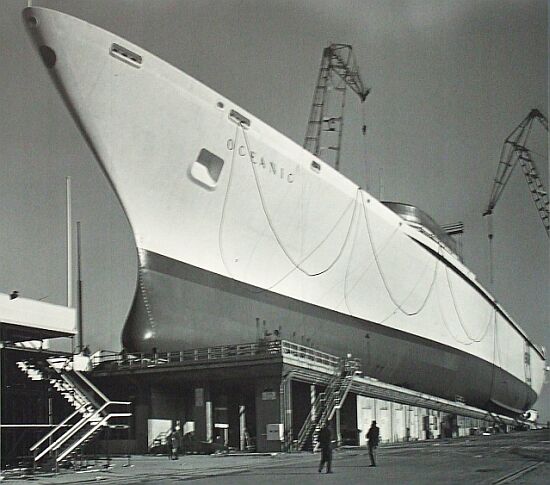
The super sleek looking SS Oceanic on the building slip and ready to be launched January in 1963
From the
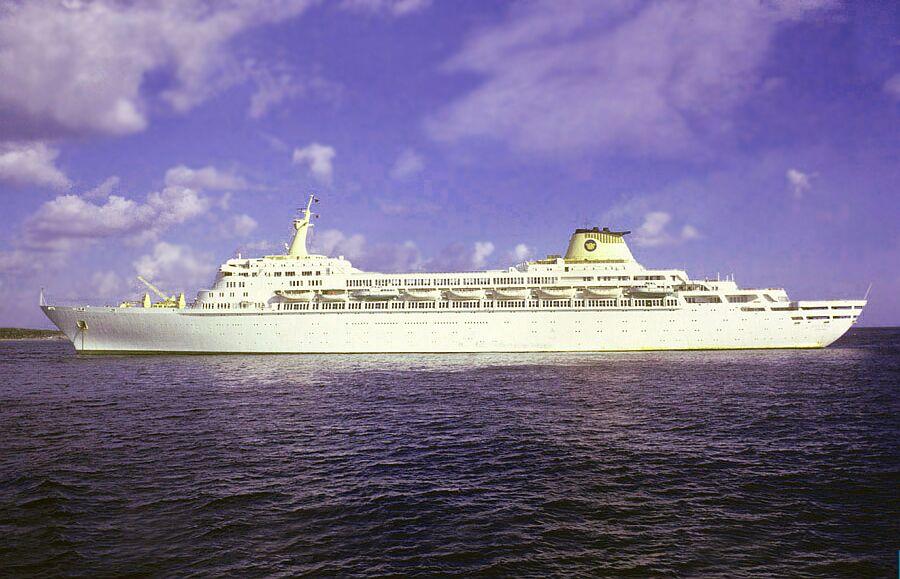
The
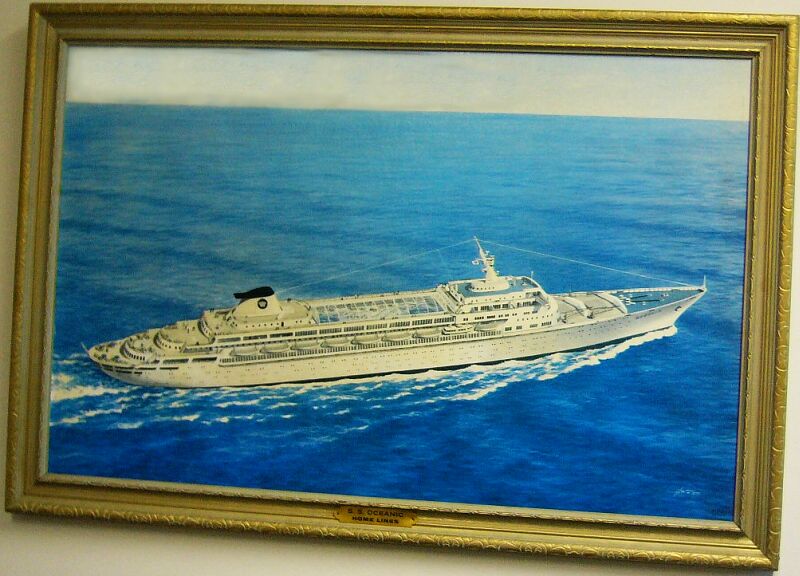
elegant looking SS Oceanic seen in the mid 60's!
As built, Oceanic accommodated up to 1,600,
configured as follows. 230 first class and 1,370 tourist class. First class had
8 major deluxe suites, 58 mini suites, 58 deluxe cabins, all having a lounge or
lounge area. In addition, there were 20 single cabins. All of the 500 tourist
class cabins had two lower beds and two upper
Other onboard features:
Closed circuit TV screens in public rooms,
apartments and deluxe cabins. TV cameras for recording cruise activities and or
transmitting films to the theatre. One of the finest Swimming pool "
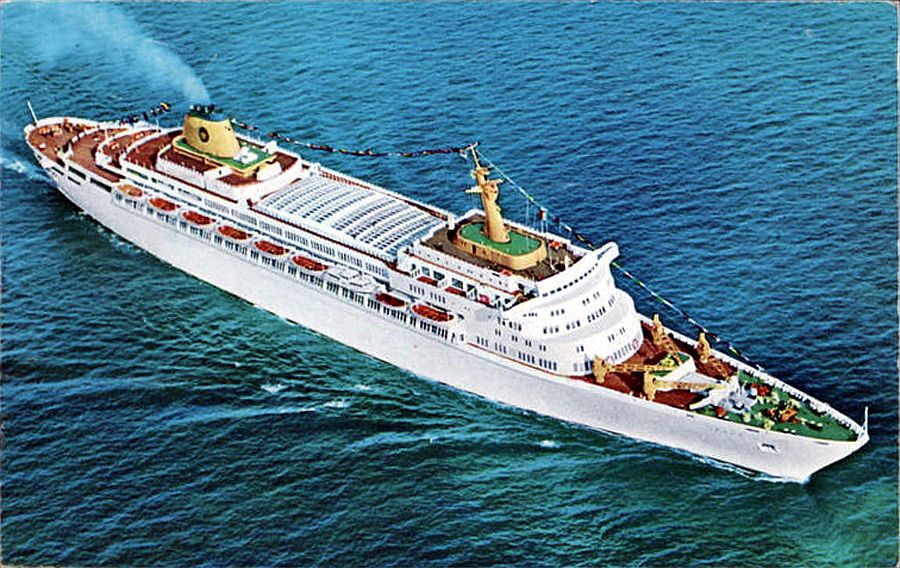
A
Home Lines postcard
From the author’s collection
SS Oceanic 1965 specifications:
Builders:
Keel Laid down: October 29, 1961.
Launched: January 15, 1963.
Tonnage: 39,241 GRT (Gross Registered
Tons)
Engines:
Screws: twin
Top Speed: 26 – max 27.30 knots
Length Overall: 772ft – 238.5m
Beam: 97ft – 29.4m
Draught: 28.5 feet
Passengers: 230 First Class
1,370 Tourist
Class
1,200 One Class
Crew: 560
However, by the time of her delivery travel
Trans Atlantic by seal had become the less favoured option due to the increased
popularity of air travel, thus the company decided to cease their regular
Trans-Atlantic line voyages almost immediately. Thus the Oceanic headed for
Maiden Voyage:
The SS Oceanic departed on her maiden voyage
to
Two Personal Stories:
Gerry Gilbert
Alba
Apart from her Atlantic services she was also
a popular cruise ship and I received an email from Debora Alba who stated: “I just located your site, loved to see these classic liners and
their photographs and I have never forgotten one of the best experiences of my
life. I have been on three ocean liner cruises with the being the
first being on the SS Oceanic. I am sending to you a photograph I
have taken of a lighter that I purchased aboard the ship during the
cruise. If you are interested I have further photographs as well as
memorabilia and I happy to scan these with the exact dates. Just as a note
of interest, this cruise was so exciting we (the many fabulous people
we met aboard) were able to, as a first, get the staff to open the
disco all night for the two week duration.”
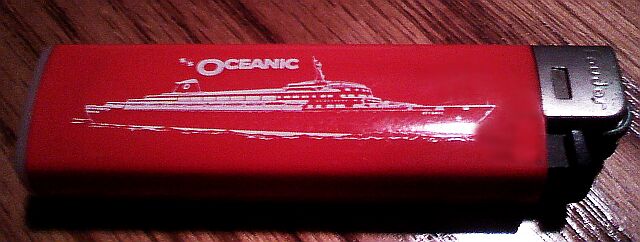
Image provided by Debora
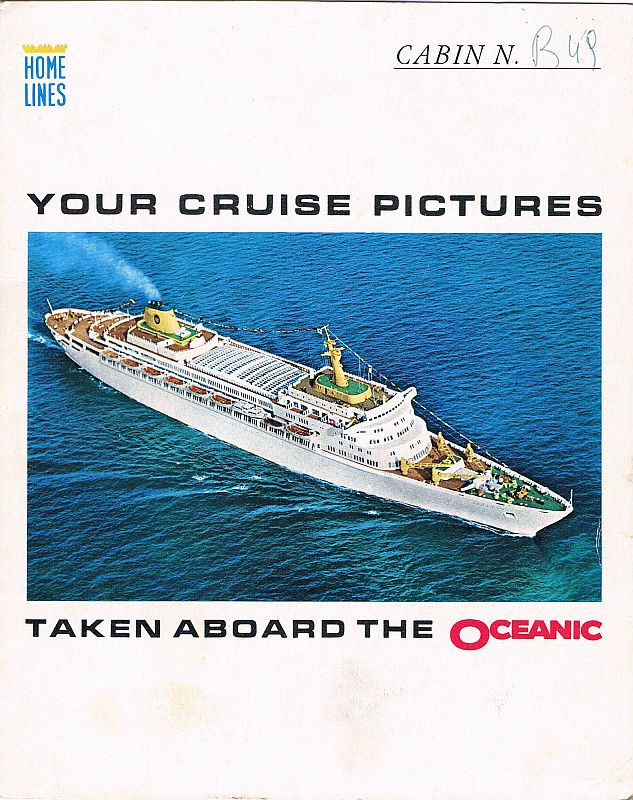
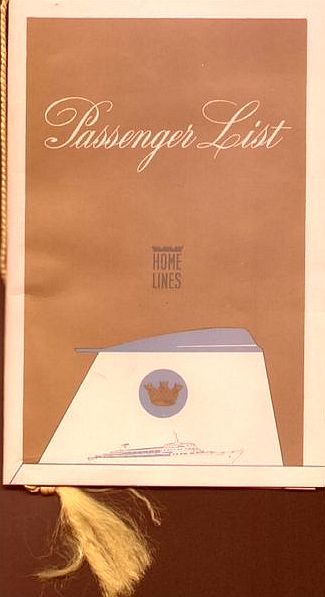
And
here is the Passenger List!
The Ship is sold:
Premier Cruise Line:
After 21 years of service and with the ever increasing fuel costs and the arrival of newer ships, Home Line decided to sell the Oceanic, and she was sold to Premier Cruise Line in 1985.
After an extensive refit, she was renamed
StarShip Oceanic and commenced cruising for Premier in 1986. Departing from
Port Canaveral she undertook mostly three and four night cruises to
Renamed Big Red Boat I, she became known for
offering the best cruise value to the
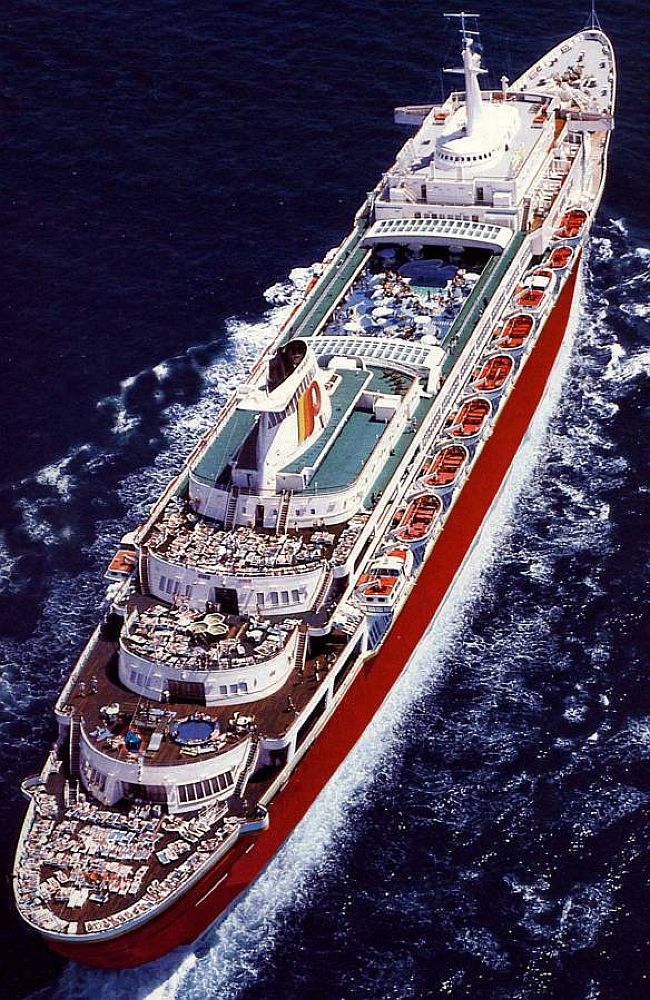
Premiers
Cruises publicity photo
From the author’s collection
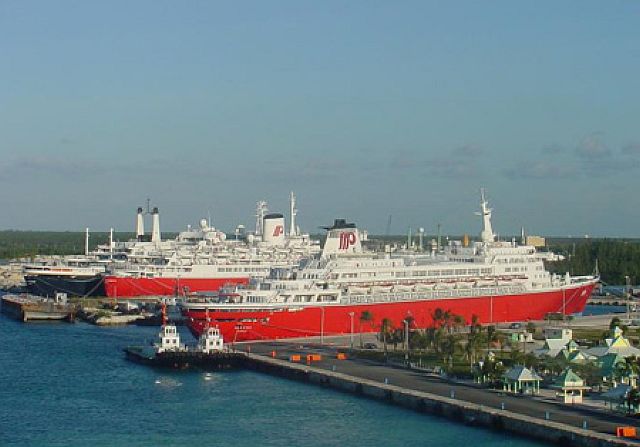
Oceanic goes Spanish:
Pullmantur Cruises:
Following the collapse of Premier, Oceanic was acquired by a new Spanish Cruise Company, Pullmantur Cruises who renamed her ‘Oceanic’ once again. She successfully cruised for this company to the point they have now acquired a good number of other excellent second hand ships.
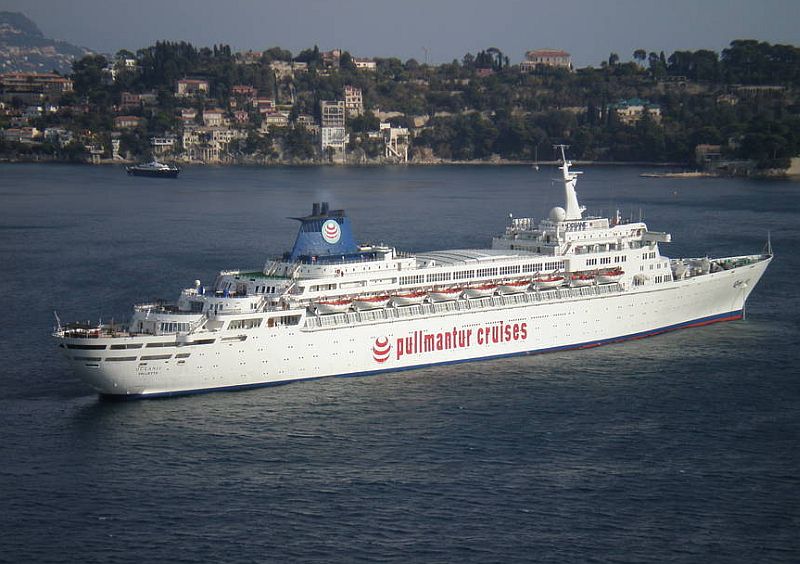
Since entering service with Pullmantur, the Oceanic has been constantly upgraded and refitted with all flammable materials having been removed and thus she was able to pass the 2010 SOLAS regulations. However as stated above, the Oceanic was in superb condition and although due to be sold, she still underwent a dry docking in Gibraltar in January 2009, thus obviously, even Pullmantur believes that she had some life in her yet as a cruise ship. Thus Pullmantur hoped to sell her to another cruise operator, as long it is not their rival Spanish operator. Despite her age and being steam powered ship, she was remarkably fuel efficient. I was told by a Scandinavian engineer who has worked on her a good number of times during her refits, that she burns 6.3 tons of fuel per hour when she sails at a maximum speed of 21 knots, which gives her a daily fuel consumption of around 150 tons. However she normally cruises at 18 knots. We know from the specifications above that when built her max speed was 27.5 knots, but this came at a hefty fuel cost, but her current cruise speed which makes her very economical to run. As a result she was a very popular and successful cruise ship indeed and a viable proposition of a company as this ship was able to sail on with any company well past 2010!
Peace Boat:
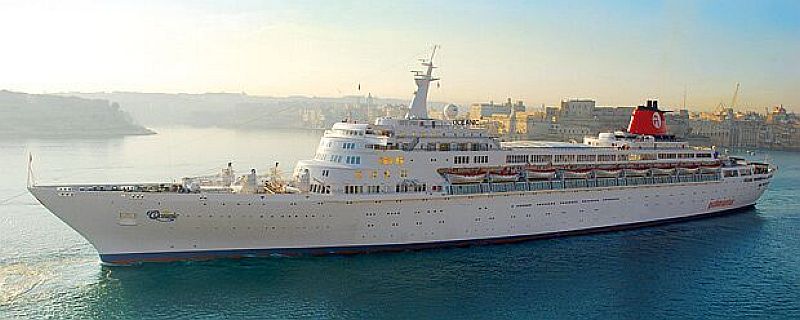
In February/March 2009 Pullmantur Cruises
negotiated a bareboat charter of the superb SS Oceanic to the well known
Japanese Peace Boat organization. She was destored in
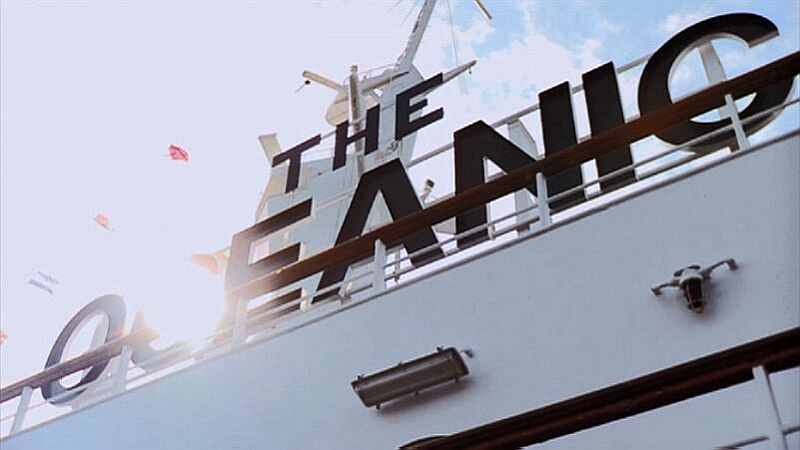
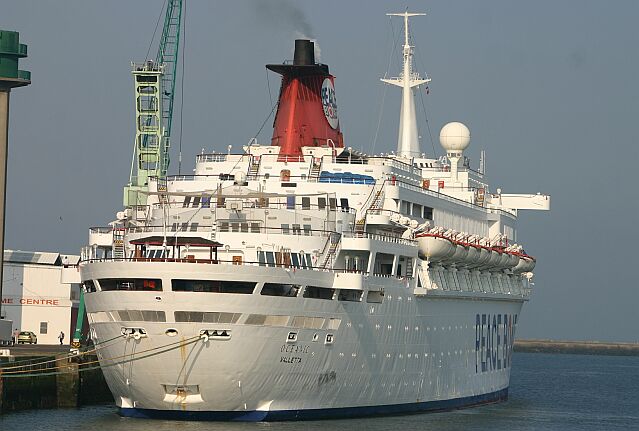
SS
Oceanic seen in
As I have full details of her last survey and dry-docking were undertaken, it became obvious that she would be able sail on for a considerable time as yet! Thus, it is important to understand that Peace Boat has had her fully certified in November, and she is not due for her next full certification until November 4, 2014. But as we now know that was not going to happen!
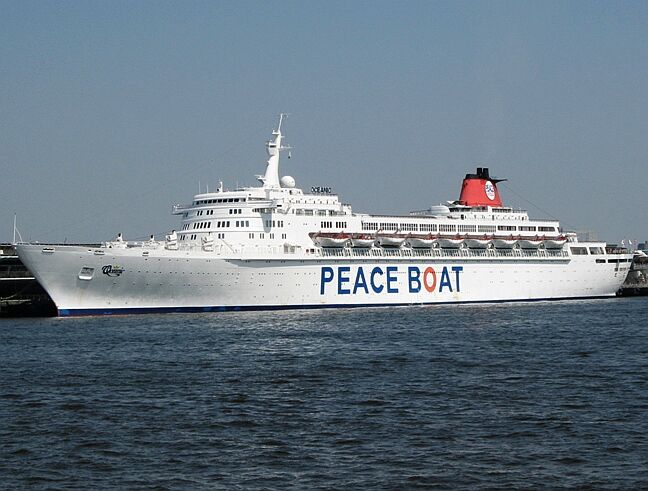
SS
Oceanic seen in her busy role at
News came about early in 2012 that Peace Boat had obtained the ex Carnival cruise ship, which was built as the MV Tropicale, which was their very first newly built Carnival ship in 1981. Later she became the Italian Costa Tropicale. Then in 2005 she became P&O Cruises Australia Pacific Star, however she was sold after some ongoing mechanical problems, which were fixed prior to her sale to Pullmantur Cruises in 2008 and she was renamed Ocean Dream. She was renamed ‘Pacific Dream’ whilst under charter to the South American-based “Viagens CVC” until April 2012 and she joined Peace Boat soon thereafter!
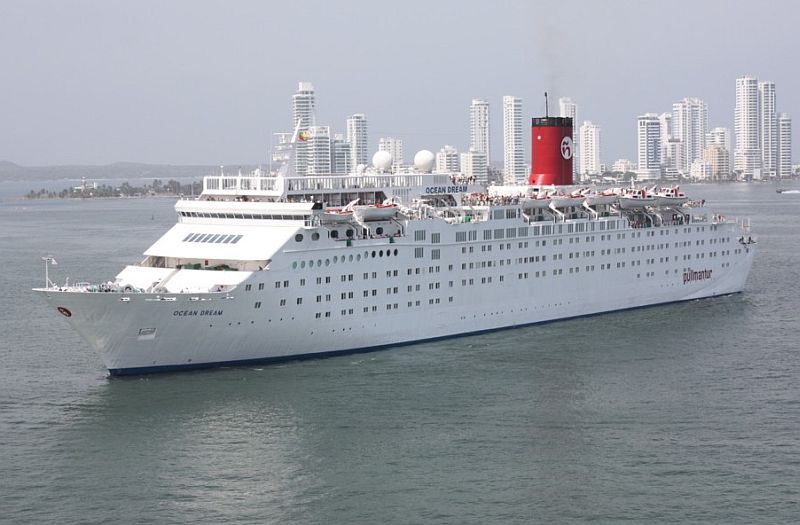
Pullmantur’s
MV Ocean Dream
The SS Oceanic was sold to a Chinese breaker,
and she headed for
At that time we did look for buyers, but sadly there was little to no interest in her and there were just no buyers out there for her in those financially tight days.
Remembering a Beautifully
Designed Ship
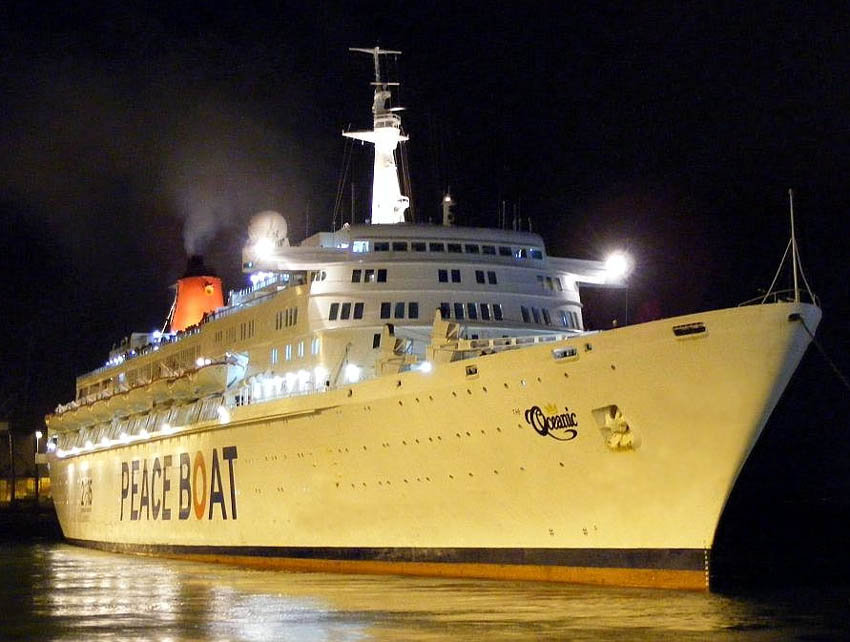
Now
named SS “The Oceanic” and she is registered in
Photograph kindly provided by
View the
Oceanic
Photo Album One & Photo Album Two
The two pages above are to be updated
***********************************
“Blue Water Liners sailing to the distant shores.
I watched them come, I watched them go and I watched them
die.”
Return to the ssMaritime MAIN INDEX
ssMaritime.com & ssMaritime.net
Also visit the …
Founded in the early 1990’s - The author
is the founder and president
Photographs on
ssmaritime and associate pages are by; the author or from the author’s private collection.
In addition there are some images that have been provided by Shipping Companies
and private photographers or collectors. Credit is given to all contributors.
However, there are some photographs provided to me without details regarding
the photographer/owner concerned. I hereby invite if owners of these images
would be so kind to make them-selves known to me (my email address may be found
on www.ssmaritime.com only), in order
that due credit may be given.
This notice
covers all pages; although, and I
have done my best to ensure that all photographs are duly credited and that
this notice is displaced on each page, that is, when a page is updated!
ssMaritime is owned & © Copyright by