ssMaritime.com - Enter a world of Classic Passenger Liners, as well as Modern Cruise Ships
Please Note:
Firefox & some
other Search Engines may not be suitable
Use Google Chrome for this
Web Page to load perfectly!

With Dr. Reuben Goossens
Maritime Historian – Cruiser Reviewer in the
Passenger Shipping Industry since 1960
Shaw Savill &

The Corinthic Class Liners
S.S. Corinthic,
Athenic, Ceramic & the Royal Yacht R.Y. Gothic
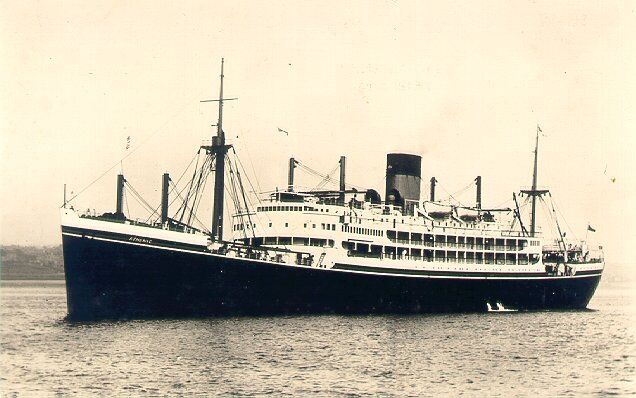
SS Athenic
Note the two large
scoop air ventilators in front of the funnel
Re the Royal Yacht
– R.Y. Gothic
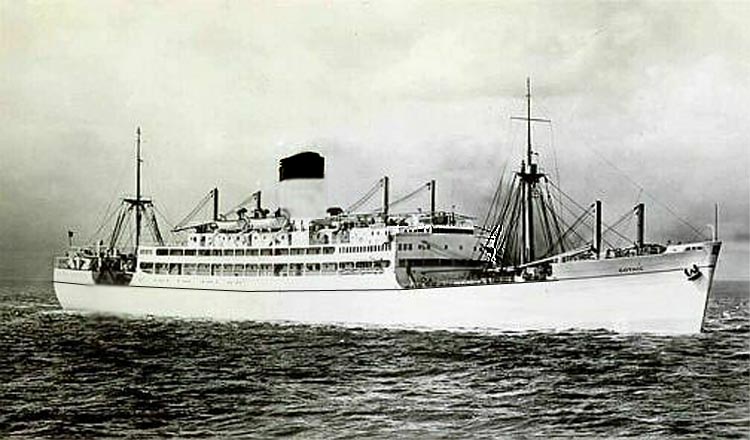
The magnificent Royal Yacht the R.Y. Gothic
PLEASE
NOTE:
Although there was an extended page on her Royal Highness Queen Elizabeth II
and His Highness Prince Philip’s “Coronation’s World Tour” online on the R.Y.
Gothic,
however late last September I took it offline to introduce a more superior
version on line with more details than I had previously! Considering our
beloved Queen and Prince Philip, who sadly have now both passed away, May they
Rest in Pease! Prince Philip did write to me thanking me for the article, and
especially how I dealt with the tragic rail accident in New Zealand whilst they
were there and their attendance at the funeral of those who had so sadly passed
away. As well as their wonderful tour details in
Re the Author of ssmaritine:
By his associate since 1983.
However whist at an out patient at the Mater Hospital in Brisbane
Australia I had one of my once a month, fits which I usually come out of within
a minute, maximum two minutes, But this lot who did now know me created hell
when all was normal again, and me and my friend said “NO, we will go
Home, He (I) is fine and we (I) Do not want to go to Emergency! Yet they rushed
me to emergency, never checked my Medicine list, and made a disgraceful error
and put me in a four day COMA and nearly killed me for they did not bother to
check all my medicine list, and gave me for 4 days the
very powerful opinion known as ENDONES. Official statements say’s: “BUPREDERMAL or
(Norspan) patches mixed with these medicines such
as other Opioids like ENDONES will cause coma and death”.
Before this hospital I lived a normal life, and I enjoyed it even though
I had certain health problem’s but they were
perfectly controlled. This completely unseen doctor turned me from being a
normal person, I am now a complete cripple and no longer have a life, like used
to have before I went to an out patient, when the destroyed my life! I am now
considered by our Government as one of the sickest people in the land. And I
now receive home nursing.
He will try to up date this wonderful Royal Yacht with my help of course,
as he is losing his sight and he can no longer stand at all, thus not walk
anymore as he did last October. He was 100% normal with some Health problems,
but he was perfectly managed by the finest Professors and the best Specialists,
but the so-called and never ever seen dr. Kylie Johnson in the 10 ddays whilst he was in that evil hospital with for people
around Him from early in the morning to late at night every single day. We
found that that the
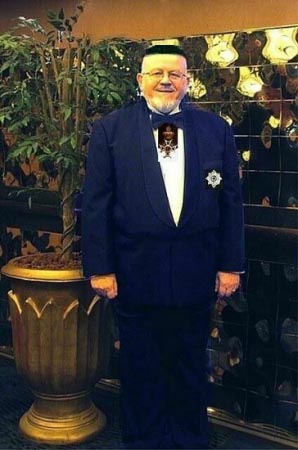
Dr. Reuben Goossens, with Medals from the
late Dutch Queen Juliana (centre), and the British Royal House (left side).
I have been thanked for writing on so
many Dutch Liners, a well on countless British Ships, but the
British Medal was due to the feature on
the R.Y. Gothic, which God willing will be back online soon!
If you so wish you can go directly to the Royal Yacht R.Y. Gothic
Further below
***********************
Shaw Shavill
Ordering Their Four Ships:
In 1946 Saw Savill &
Albion ordered four new passenger cargo liners that would join their much
larger sister QSMV Dominion Monarch on the UK - New Zealand service. Each would
be around 15,000 GRT (Gross registered tons) and accommodated 85 first class
passengers. Being passenger cargo ships each had 6 large holds, with space for
668,000 cubic feet of cargo, of which 510,000 was for refrigerated goods.
PLEASE NOTE: All photographs, unless marked
otherwise, are by the author, or from the author’s private collection.
There are some from unknown sources. *Please read the special note at the
bottom of the page in regard to these photographs.
Details in order of
completion
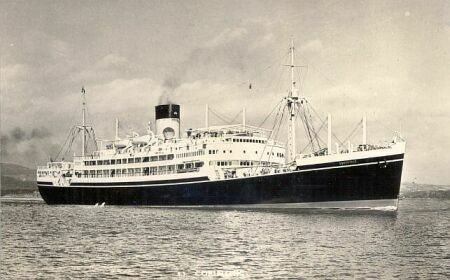
S.S. Corinthic
SS Corinthic (2), built
by Cammell Laird & Co Birkenhead (yard 1175), was
the first of the series. She was launched on May 30, 1946, completed in April
1947 and departed on her maiden voyage from Liverpool to
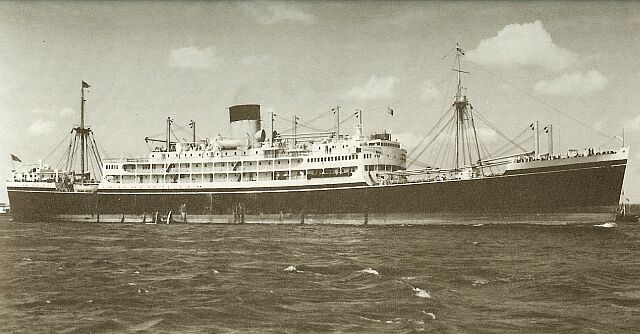
SS Corinthic
*****************************
S.S. Athenic
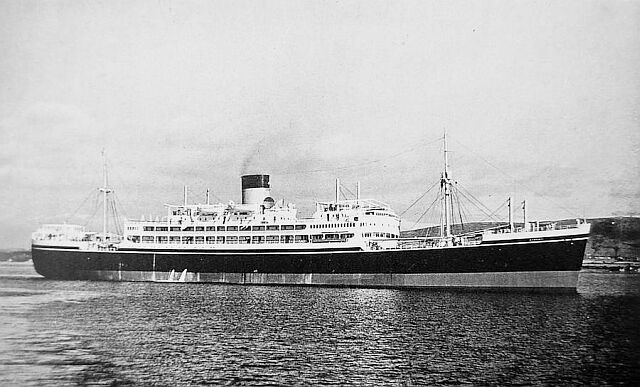
SS Athenic
The Corinthic was
followed by SS Athenic (2), built by Harland and Wolff,
Ltd, Belfast (yard 1326), was launched on November 26, 1946, completed in July
1947 and departed on her maiden voyage London to Auckland on August 1, 1947.
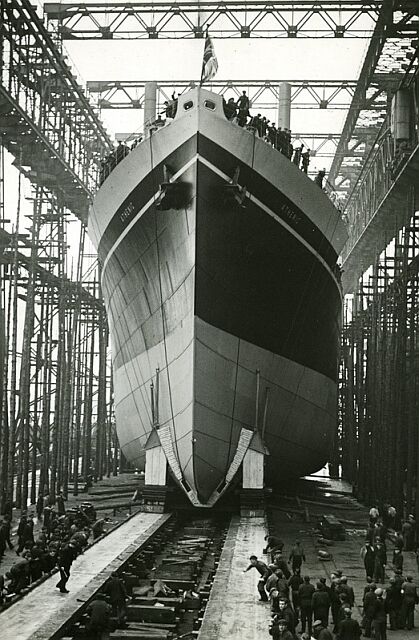
Athenic - launching on November
26, 1946
From the Harland and
Wolff Archives
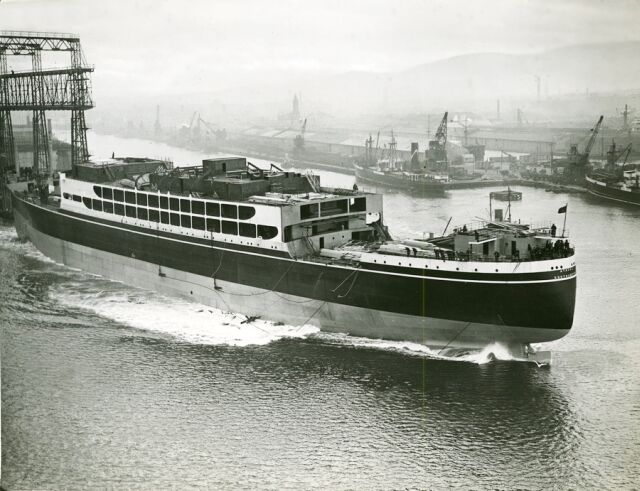
SS Athenic enters the water for the first time and will head
for her fit-out berth
From the Harland and
Wolff Archives
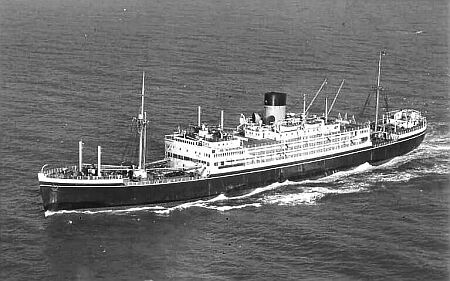
SS Athenic
*****************************
S.S. Ceramic
The second set was the SS ceramic (2), also built Cammell Laird (yard 1185), was launched December 30, 1947,
completed in October 1948 and departed on her maiden voyage on November 6,
1948, from Liverpool to
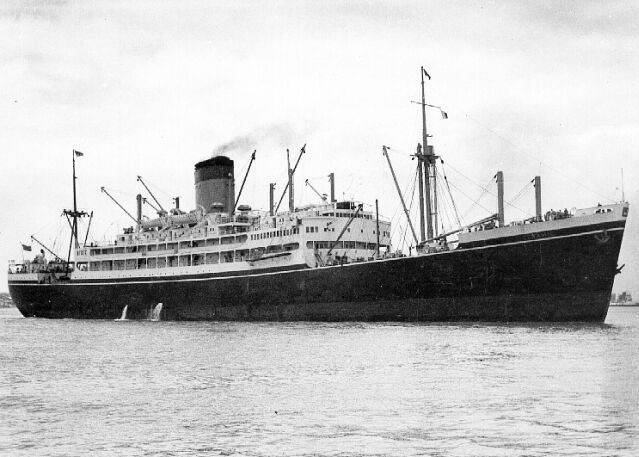
SS
Ceramic in
Note the new mushroom
style ventilators forward and aft of the funnel
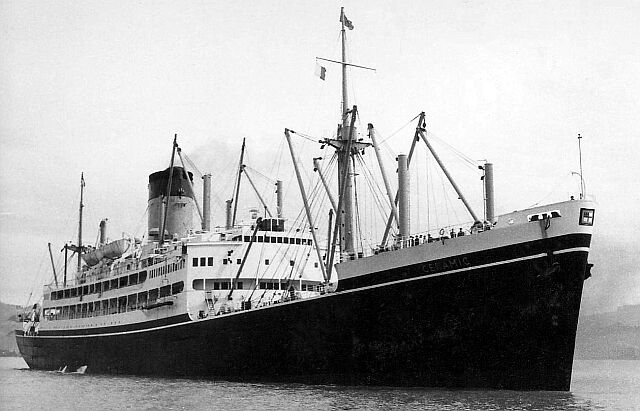
Ceramic
arriving in Lyttelton () in the South Island of New
Zealand on September 23, 1961
Photograph by and ©
Dave Edge -
*****************************
S.S. Gothic
The fourth, the SS Gothic (2), built by Swan
Hunter, Wallsend-on-Tyne (yard 1759), would become
the most famed of the quartet as she would become the Royal Yacht in 1952-53.
She was launched on December 12, 1947, completed in December 1948, and departed
on her maiden voyage on December 23, 1948, sailing from Liverpool to
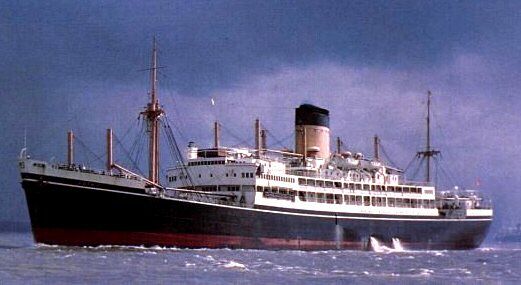
SS Gothic seen as built with the “Thorneycroft” funnel
Differences between the
first & second sets of ships
The hulls on both the Ceramic and Gothic varied
somewhat from their earlier sisters, having “rolled” bows and
mushroom style deck ventilators, whilst their older sisters having
“razor” style bows and scoop ventilators, however, their
superstructures were the same. In 1951 Ceramic and Gothic were given
“Thorneycroft” smoke-deflecting funnel tops. These proved such a
success they were also fitted to P&O’s
Accommodations
Like their famed running mate QSMV Dominion
Monarch, their appointments were luxurious with walls clad in fine timbers,
Persian rugs adorning the floors, as well as a host of tapestries, murals and
fine paintings. Accommodating just 85, passengers obviously lived in
considerable comfort! For the number of passengers, their superstructures were
quite large. Each featured two wide covered promenade decks and spacious sports
decks above.
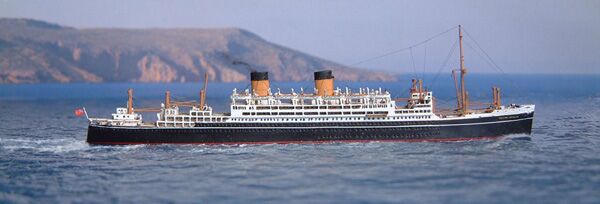
The stately QSMV Dominion Monarch
A photo of a model of the ship - sent in by J. Thurston
Public rooms: Promenade deck aft featured the
elegant Smoke Room, followed by the light and airy Verandah
Café. The Dinning Room and Main Lounge was located forward on Bridge (
All “Premium” cabins were located on
boat deck, with other cabins being situated forward on Promenade deck, and aft
on Main deck. Each had 53 cabins, consisting of suites, twin and single bedded
cabins, most having private facilities. The standard and style of accommodation
was in line with the luxurious Dominion Monarch.
Their main rivals on the
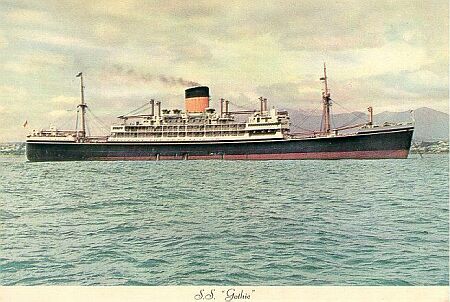
SS Gothic
Schedules were varied: As example From May to
December in 1954 both the SS Athenic and Ceramic
sailed from London, via Tenerife or Las Palmas, Cape Town, to Fremantle, Adelaide,
Melbourne, Sydney, Brisbane, and then to New Zealand ports and homeward. Both
Gothic and Corinthic operated on the
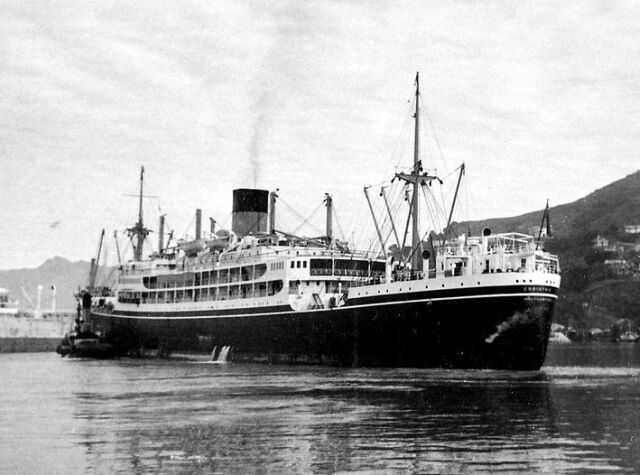
SS Corinthic seen at Lyttleton New
Photograph © Dave Edge –
Specifications
Tonnage: Corinthic
-15,682 (14,285 - 1965)
Athenic
– 15,187 (14,248 - 1965)
Ceramic
– 15,869
Gothic
– 15,902
Length
- Beam: Corinthic – 560ft x 71.2ft
Athenic – 564ft x 71.2ft
Ceramic
– 564ft x 72.2ft
Gothic
– 561ft x 72.2ft
Draught: All - 29.7ft
Engines: Geared steam
turbines from builders
SHP: 14,000
Screws: Twin
Service
speed: 17 knots
Passenger
decks: Four
Passengers: 85 first class
Crew: 95
Also read: The Rob Wilson Story - Engineer on S.S. Corinthic
1961/62
*****************************
Royal Yacht
– R.Y. Gothic
PLEASE NOTE: Although there was an
extended page on her Royal Highness Queen Elizabeth II and Prince
Philip’s “Coronation’s World Tour” online, however late
last September I took it offline to introduce far more material considering our
beloved Queen and the Prince Philip had passed away; May they Test in Peace!
However as you may have read above there has been a tragedy with Reuben, and we hope that we may be able together to finish these pages. Thankfully he had written much of it before e visited that evil Hospital that completely destroyed his Life! (SE).
The
Reason it may take a while is because of the following:
Reuben, with my help will try to update the Royal Yacht Gothic pages with
help of my assistance, as he is going blind and not able to stand any more or
walk. All of those things he could do before the Mater Hospital in Brisbane
Australia who severely poisoned Him with a medicine which he was not permitted
to have, his doctor and every medical expert made this very clear, such as Opioids
like ENDONE! Reuben was 100% normal with some health problems and pain which he has
gad since 1987, but he was perfectly managed by the very Professors and
Specialists, but this lot in this Hospital where he was just going to an out
clinic, seemed to go totally mad. The so-called and never ever seen in 10
days dr who proved to be nothing more than a GP Kylie
Johnson proved to be very Dangerous. I am sure that Reuben will never set a foot in
that place ever again, for they are not an official government backed Hospital,
and from my experience they
are very dangerous!
The
S.S. Gothic was Refitted first in 1951:
Gothic was sent to Cammell Laird shipyards in
1951 to be refitted to become the Royal Yacht for a tour of
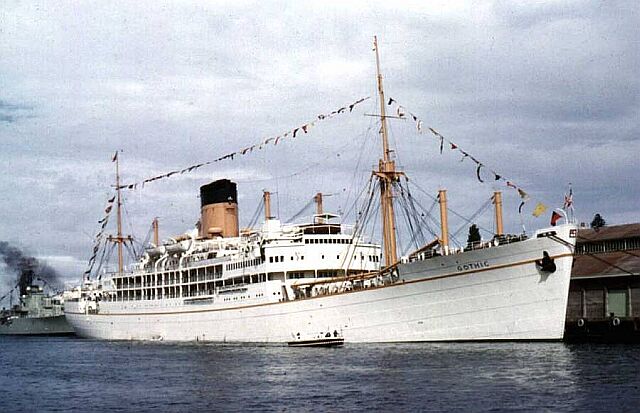
SS
Gothic the Royal Yacht in
*Photographer unknown
The
Royal Suites and Lounges and Dinning Room were magnificent, and the work was done
in a palatial manner.
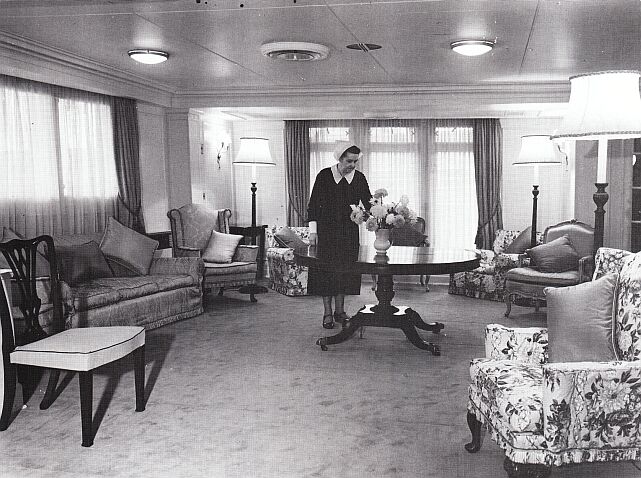
This
passenger lounge was converted to be the
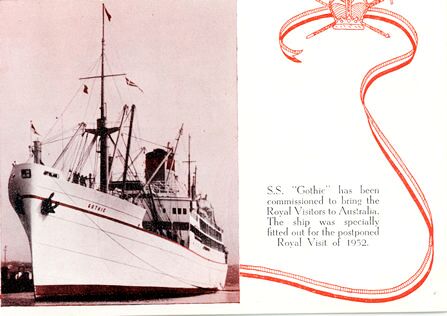
This
commemorative postcard was issued for
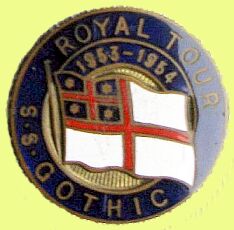
The SS
Gothic 1953/54 – Souvenir Royal Tour Badge
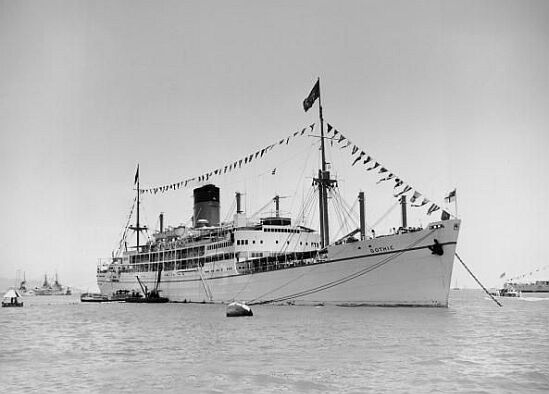
A
superb shot of the Royal Yacht
*Photographer unknown
She carried HRH Queen Elizabeth and the Duke of
Edinburgh to the Caribbean and later across the pacific for the Royal visit to
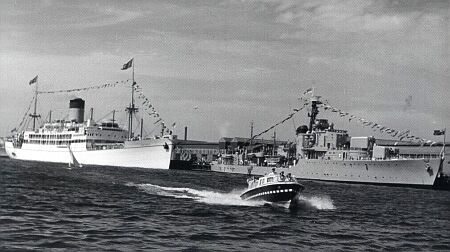
SS
Gothic seen in Fremantle, note the Royal standard on the forward mast departing
the
*****************************
The Final Years of the Gothic
After her Royal duties, her hull was repainted black again and returned
to her regular duties sailing from
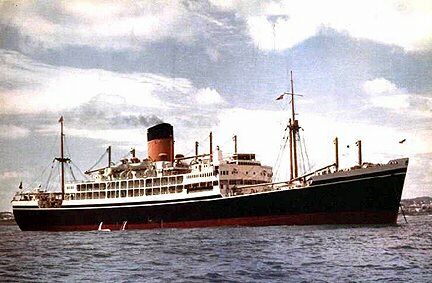
Repainted
in her original livery, the Gothic returned to regular passenger’s
services
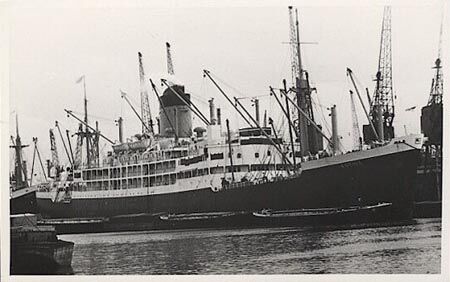
Seen
with her new funnel extension after her Royal Yacht days
*Photographer unknown
On August 2, 1968, having left New
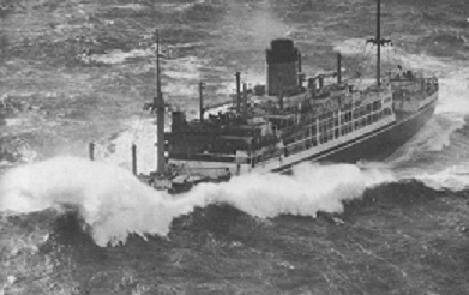
The
Gothic encounters stormy seas as she approaches
Whilst in
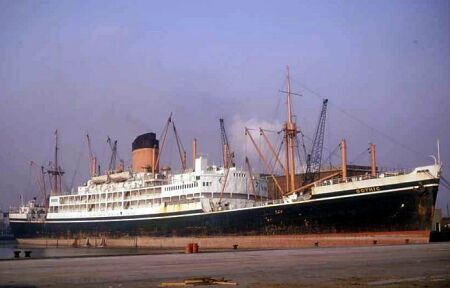
SS Gothic
seen after the partial fire repairs
Forward
windows were sealed and cabins remained closed after the fire
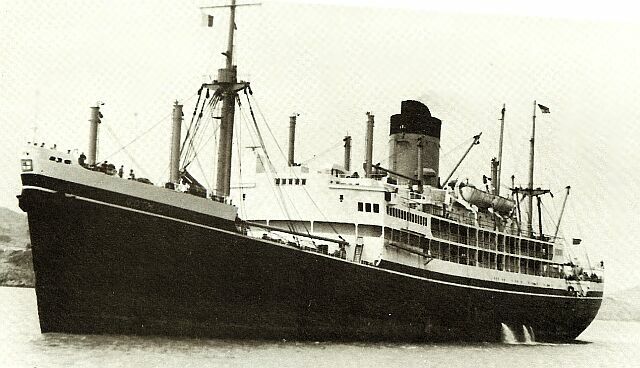
One
of the last photographs taken of the Gothic
*Photographer unknown
The R.Y. Gothic will
be on the main page soon at; click the Link below, if not there as yet, click
the back arrow
*****************************
The end of the S.S. Corinthic and Athenic
Sadly the demise of her two sisters SS
Corinthic and the Athenic
followed all too soon after as they were sold to Taiwanese breakers. They
arrived in
*****************************
The last ship of the Series
– S.S. Ceramic
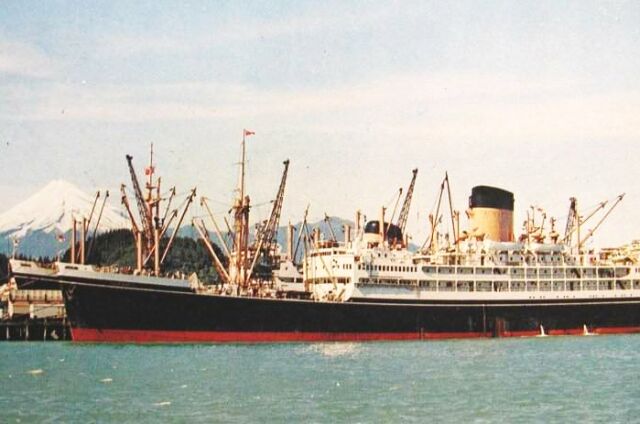
The
wonderful SS Ceramic sailed on as the longest serving passenger-cargo ship of
the series
*Photographer unknown
SS Ceramic served for another three years, serving
a total of 24 years, as a full time passenger-cargo liner. However early 1972 she was sold to
*****************************
The Author’s Memories
Whilst working in the passenger shipping industry
first in
*Recently I received an interesting email from Dick
Goodey who was the Second Engineer on both Corinthic and Athenic he wrote in
response to the above statement “in rough seas they were not the most
stable ships at sea.” I would like to place his most informative email
below as it contains some interesting information.
“Dear Reuben,
For many years I have enjoyed your entertaining writing on real ships,
and agree with the majority of your views. However, I must take issue with your;
“ in rough seas they were not the most stable ships at sea," The
statement itself is true, but gives the impression that these ships were
uncomfortable in rough weather. Even when fully loaded with several thousand
tons of butter in their holds, these ships had a small meta-centric height and
thus technically were not the most stable ships at sea. However, this gave them
a very nice slow and even rolling motion, far more comfortable than the
unnatural, stiff, stabilized motion of the larger modern vessels. There were no
better ships to take a far south great circle route across the Pacific.
On the subject of great circle routes, you will be interested in the
method of steering the Athenic. Frank White who
was the Chief Engineer for almost 20 years, ordered one screw to turn
slightly faster in order to keep the rudder amidships as much as possible.
Outward, the port screw was faster homeward it was starboard’s turn. The
system worked, the Athenic used less fuel than the Corinthic!
I sailed as Second Engineer on both Corinthic
and Athenic, undoubtedly the high water mark of my
sea-going career.”
I thank Dick Goodey for
this insight of the running of the ships!
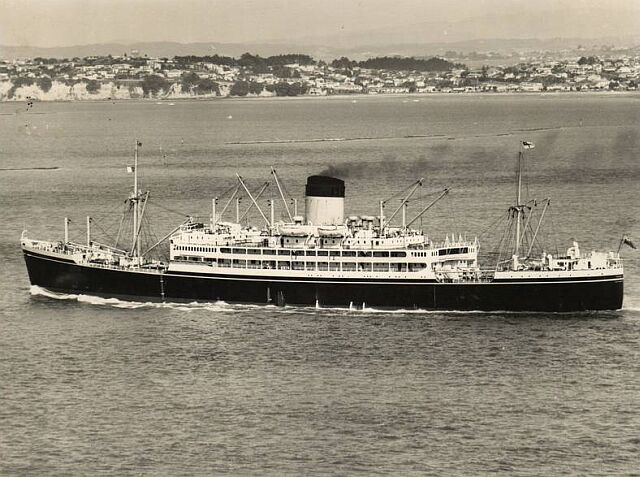
Ceramic
arriving in Auckland New
*Photographer unknown
Also read: The Rob Wilson Story - 9th.Engineer
on SS Corinthic 1961/62
Over the years Reuben has received thousands of Dear Dr.
Goossens emails of thanks and on
this page there are just some of them.
The following are all
my Shaw Savill features on ssMaritime.com
1... SS Athenic Class Ships: These three fine liners built in 1902/03 introduced
two of the names on this page
2… QSMV Dominion Monarch: She was Shaw Savill’s the ultimate Super Luxury Liner.
3… SS Corinthic Class Liners: Four fine
Luxury Passenger Cargo ships built in 1947/48.
. onboard from
1961 to 1962.
5… Royal Yacht “R.Y.
Gothic: Currently being up dated, back online soon.
6… SS Southern
Cross: A 23 webpage feature on a
revolutionary passenger liner!
***********************************
Blue
Water Liners sailing to the distant shores.
I
watched them come, I watched them go and I watched them die.”
Or ENTER THE SITE's INDEX HERE
Amazingly: ssmaritime.com has received
7,579 Billion reader’s over
almost 32 years
Last update was on: March 27, 2023
Remember many readers have read different pages & ships
hundreds of times
Also certain features have up to 24 pages and that is a great deal of reading!
**************************
The Author has been in Passenger Shipping & the Cruise
Industry since 1960.
“Managing Director”,
and “Owned a Cruise Company”
In addition he was founder of “Save the Classic
Liners Campaign” in 1990.
Please Note: ssmaritime and associated sites are 100% non-commercial
and the author seeks no funding of any shape
or form, never have and never will!
Photographs on ssmaritime and associate pages
are by; the
author or from the author’s private collection. In addition there are
some images that have been provided by Shipping Companies and private photographers
or collectors. Credit is given to all contributors. However, there are some
photographs provided to me without details regarding the photographer/owner
concerned, so sorry if this is the case.
This notice covers
all pages; although,
and I have done my best to ensure that all photographs are duly credited and
that this notice is displaced on each page, that is, when a page is updated!
ssMaritime is owned & ©
Copyright by Reuben Goossens - All Rights Reserved.