Union
Steamship Company MV Matua
Please Note: Firefox and some other search engines are not
suitable - Use “Internet Explorer” for this page to load perfectly!

Click the logo above to reach
the ssMaritime FrontPage for News Updates & “Ship of the Month”
With
Reuben Goossens
Maritime Historian, Cruise‘n’Ship
Reviewer, Author & Maritime Lecturer
Please Note: All ssMaritime and
other related maritime/cruise sites are 100% non-commercial and privately
owned. Be assured that I am NOT associated with any shipping or cruise
companies or any travel/cruise agencies or any other organisations! Although
the author has been in the passenger shipping industry since 1960, although is
now retired but having completed around 680 Classic
Liners and Cargo-Passengers Ships features I trust these will continue to
provide classic ship enthusiasts the information the are seeking, but
above all a great deal of pleasure!

Union Steamship Company
The Twin
Screw Motor Vessel
MV Matua
Page One – Her
History
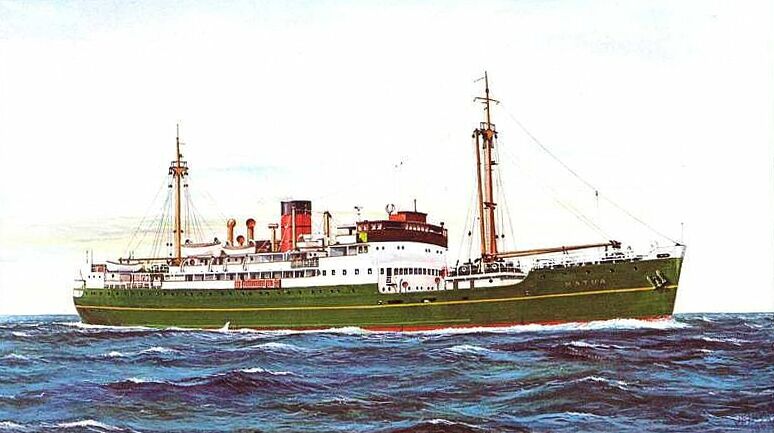
A
fine painting of the
I add this page as I
recall my days on this fine little ship. I worked for the Union Steamship
Company in the early sixties and obviously spent a great deal of time on her
and the newer Tofua. However, there was something about this little
“homely” ship that attracted so many annual passengers for a round
voyage to the
In the 1930's the
first cruise ships started to appear off the coasts of various South Pacific
islands, lured there by the exotic destinations, the weather, the golden
beaches and the friendly islanders. From
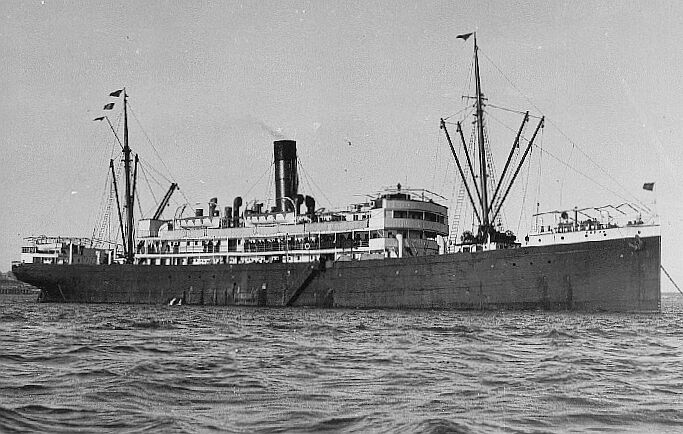
From the
Author’s private collection
However, the SS Tofua
I completed its last
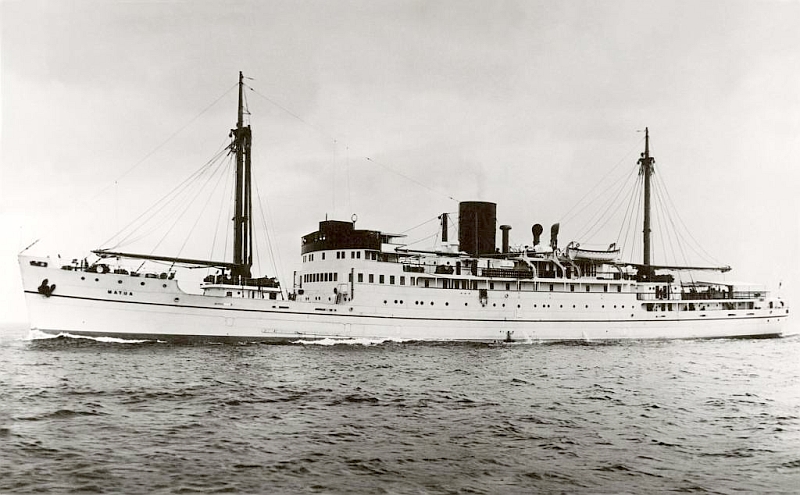
The
Matua, looking like an elegant white yacht
From the
Author’s private collection
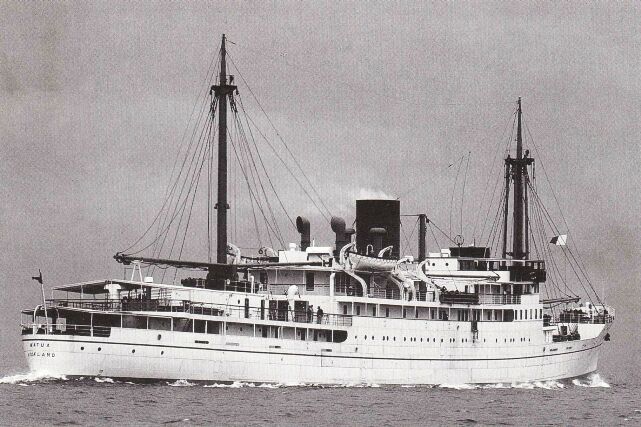
A
fine stern view of the
From the
Author’s private collection
Whilst she had a
white hull she had a Green hull band and Blue boot topping, however in 1949
having had a constant battle with rust on her hull, she finally changed to the
standard USS Co colours, being the bronze green hull with a yellow hull band.
Although during WWII she had been painted grey.
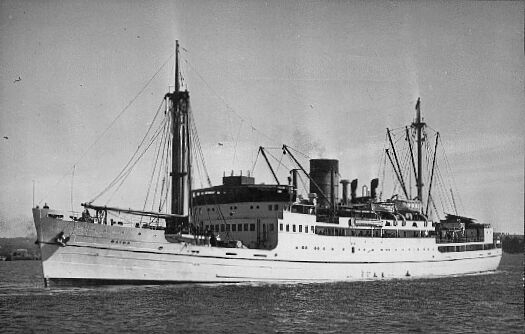
Matua
still in her white livery, but she is seen here with her new refit and aft
build-up
From the
Author’s private collection
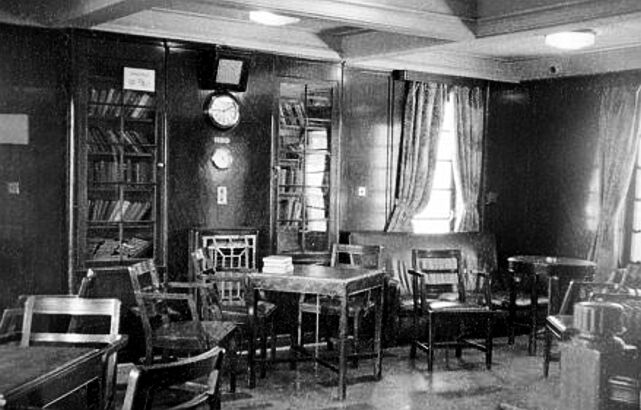
The
Smoking Room & Library

A
corner of the lounge
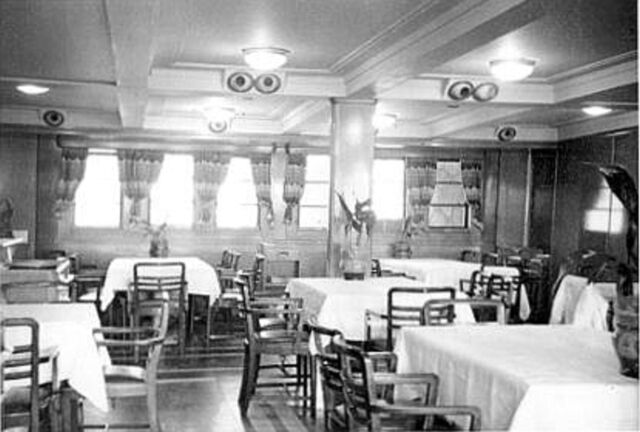
The
Dining Room
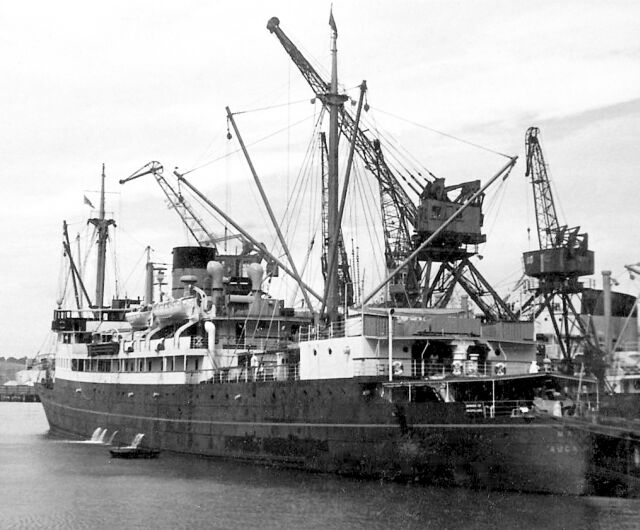
MV
Matua seen in Lyttelton, being the
Photograph by and ?
Dave Edge
In addition to the
tourists onboard, Matua could also cater for a considerable number of deck
passengers to enable Pacific Islanders to sail overnight between the
Usual ports of
call,
The word
“Matua" is common to most Polynesian languages and usually means
“kinship.” In
Apart from the odd
mishaps and experiencing the occasional cyclone, Matua was a very successful
ship and she served the Union Steamship Company for a magnificent 32 years. One
of her recorded mishaps occurred on her maiden voyage when apparently she hit a
reef at Aitutaki, damaging one of her propellers.
Then the following year she struck a buoy whilst negotiating the southern
entrance to Nuku'alofa harbour when again she damaged a propeller. Then in 1957
she grounded on Duff Reef some 10 miles east of “Wailangilala”
in the Fiji Group of Islands and she was towed off undamaged by the American
destroyer the “James E. Keys.”
Early in her career
she was refitted and her tonnage changed to 4,192.53

The
Matua is seen here with her traditional Union Steamship Green Hull and yellow
ribbon around her hull
Photographer
unknown – *See Photo notes at bottom of page
The end of her days with the Union Steam Ship Co!
After 32 years of faithful services, having carried
Royalty and commoners alike, the Matua’s days
were about to end with the USSCo. Shaving been such a faithful ship for so long, but
her time was up and she was sold in 1968 to a Pilipino Company “E.K.Litojua” or “K. Shipping Corp” of
Her departure was a special occasion, for the
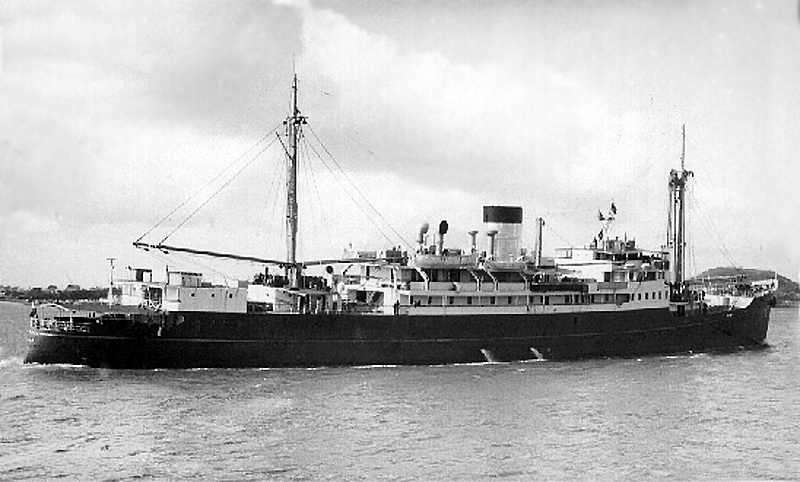
MS Sultan K.L. is seen departing
Photographer is unknown – *Please see photo
notes at the bottom of the page
She headed up to Asia
where she would be employed, however, just over a year later sadly this
delightful ship ran aground in
Specifications
Built by:??????????? R & W Hawthorn Leslie & Co.
Ltd at
Launched:????????? March 1936
Delivered:????????? June 1936
Length:???????????? 355.2 ft / 108.26 m
Beam:?????????????? 50.5 ft / 15.39 m
Draft:??????????????? 21.75 ft / 6.63 m
Tonnage:?????????? 4,166
Propulsion:??????? Two sets of Armstrong-Sultzer six cylinder diesel engines
Screws:???????????? Twin
Speed:????????????? Achieved 17.027 knots at trials / general max 16.6
knots / service speed 14.5 knots
Cargo capacity:?? 2,500 tons, partially refrigerated
Passengers:??????? 39 (1936-1940) / 93 (1941 – 1951)
/ 69 (1951– 1968)
MV Matua carries special meaning in the hearts of all those who know the this remarkable
little ship; she is remembered by many families as the lifeline between the
Pacific Islands, especially Tonga and New Zealand in the 1930s, 40s and 60s
until she was replaced in 1952 by the MV Tofua II, which was a fine
ship, but did not have the “Matua – Kinship” with the people
of the Islands!
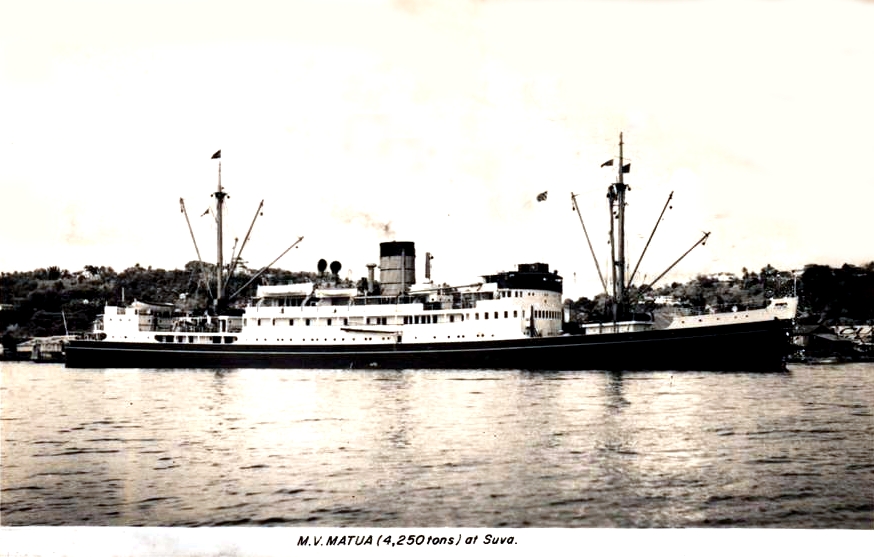
The
delightful USSCo postcard of the
The
author certainly remembers his many visits to the ship and the wonderful meals
on board!
Page Two:
Also view the other USSCo
Passenger Ships online
SS Waitaki
TSS Monowai /
I watched them come, I watched them go and I watched them die.”
****************************
Visit our ssMaritime
Main INDEX
Where you will discover around 680 Classic Passenger
& Passenger-Cargo Liners!
ssMaritime.com & ssMaritime.net
Where the ships of the past make history & the 1914 built MV Doulos Story
Please Note: ssmaritime
and associated sites are 100% non-commercial and the author does not seek
funding or favours and never have and never will.
Photographs on ssmaritime and associate pages are either by the author or from the author’s
private collection. In addition there are some images and photographs that have
been provided by Shipping Companies or private photographers or collectors.
Credit is given to all contributors, however, there are some photographs
provided to me without details regarding the photographer or owner concerned.
Therefore, I hereby invite if owners of these images would be so kind to make
them-selves known to me (my email address can be found at the bottom of the
page on www.ssmaritime.com), in order
that due credit may be given.
ssMaritime is owned & ? Copyright by Reuben Goossens - All Rights Reserved